Introduction
Fisetin is a naturally occurring flavonoid that has attracted growing attention in recent years due to its diverse biological activities and expanding industrial applications. Found in a variety of fruits and vegetables such as strawberries, apples, and onions, Fisetin is widely studied for its antioxidant, anti-inflammatory, and cellular health–supporting properties. As interest in healthy aging, cognitive support, and functional ingredients continues to rise, Fisetin has emerged as a promising bioactive compound across multiple industries.
From a scientific perspective, Fisetin plays an important role in modulating key cellular signaling pathways related to oxidative stress, inflammation, and cell senescence. These mechanisms have made it a focus of research in nutraceutical development, pharmaceutical formulation, and functional food innovation. At the same time, manufacturers and formulators are increasingly seeking reliable, high-purity Fisetin raw materials that meet strict quality and regulatory requirements.
In this article, we provide a comprehensive overview of Fisetin, including what it is, how it works at the molecular level, its potential health benefits, safety considerations, and its applications across different industries. As a professional chemical supplier, Runtai Chemical is committed to supporting global B2B customers with consistent quality, technical expertise, and scalable supply solutions for Fisetin and other high-value chemical ingredients.
What is Fisetin?
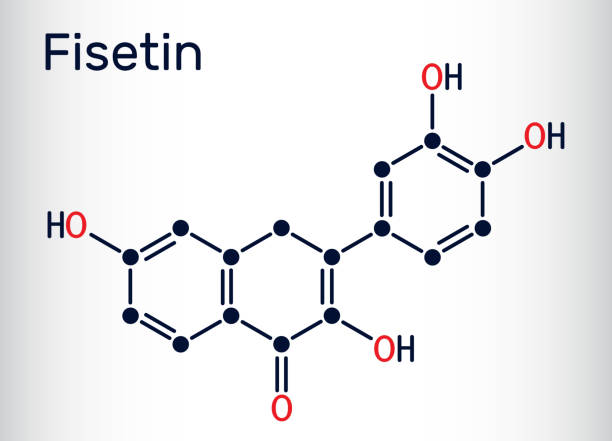
Fisetin is a naturally occurring flavonoid (more precisely, a flavonol) chemically known as 3,7,3′,4′-tetrahydroxyflavone, belonging to the broad family of polyphenolic plant pigments that contribute to color and oxidative stress protection in plants. As a bioactive food-derived compound, fisetin is often grouped with other plant polyphenols due to its multiple antioxidant and signaling-modulating properties that are currently under intensive investigation.
From a natural origin perspective, fisetin is present in low concentrations in several edible plants, including strawberries, apples, persimmons, onions, grapes, cucumbers, and other colorful fruits and vegetables. Among commonly consumed foods, strawberries are frequently cited as one of the richest natural fisetin sources, whereas many other fruits and vegetables contain only microgram-per-gram levels, which limits direct dietary intake as a practical commercial source.
Chemical characteristics of Fisetin
At the molecular level, fisetin has a typical flavonol backbone with four hydroxyl groups, which support its redox activity and ability to interact with biological membranes and proteins. Fisetin shows relatively high lipophilicity (reported log P around 2.2) and low aqueous solubility, factors that contribute to limited oral bioavailability and drive interest in formulation technologies such as nanocrystals and inclusion complexes to improve stability and delivery.
Because of its phenolic structure, fisetin can function as a yellow plant pigment and as an antioxidant, but the same conjugated system also makes it sensitive to factors such as light, pH, and oxidation, which must be considered during extraction, processing, and storage. In industrial development, researchers pay close attention to fisetin’s physicochemical profile—solubility, partition behavior, and degradation pathways—when designing dosage forms and bulk APIs for global markets.
Natural extraction vs. chemical synthesis
From an industrial standpoint, fisetin can be obtained either by extraction from natural plant materials or through purely chemical or semi-synthetic routes starting from aromatic and chalcone-type intermediates. While natural extraction from sources such as Toxicodendron vernicifluum or fisetin-containing fruits is technically feasible, the low content in most edible crops and the complexity of purification steps make large-scale, cost-efficient production from food sources challenging for API and supplement use.
Consequently, modern fisetin APIs for supplements and research are increasingly produced via optimized synthetic or semi-synthetic processes that offer better control over purity, scalability, cost, and environmental footprint than direct isolation from fruits. In parallel, biotechnological and biotransformation approaches are being explored as longer-term options to align fisetin manufacturing with green chemistry principles and future regulatory expectations for nutraceutical and pharmaceutical ingredients.
Application value in supplements, foods, and R&D
Due to its antioxidant and signaling-modulating profile, fisetin is being widely explored as a value-added ingredient in dietary supplements, especially in formulations positioned around healthy aging, cellular protection, and senolytic concepts, within the limits of each region’s regulatory framework. In functional foods and beverages, fisetin can be incorporated as a plant-derived polyphenol to enrich formulations, though its low natural abundance and solubility constraints often favor the use of standardized extracted or synthetic fisetin over relying on raw food matrices alone.
In pharmaceutical and biomedical research, fisetin is investigated as a lead or supporting compound in areas such as neuroprotection, anti-inflammatory strategies, and age-related disease models, which drives demand for consistent, high-purity fisetin suitable for preclinical and formulation studies. For industrial buyers and formulators, this combination of natural origin, defined chemical structure, and expanding data on biological activity makes fisetin an increasingly interesting flavonoid for next-generation supplements, functional products, and R&D pipelines.
Mechanism of Action of Fisetin
Antioxidant activity
Fisetin functions as an antioxidant by directly scavenging reactive oxygen species (ROS) and reactive nitrogen species (RNS), helping to reduce oxidative stress at the cellular level. Its polyphenolic structure allows it to donate electrons or hydrogen atoms, chelate transition metals, and protect lipids, proteins, and DNA from oxidative damage in experimental models.
In addition to direct radical scavenging, fisetin can upregulate endogenous antioxidant defenses, including enzymes such as glutathione peroxidase, superoxide dismutase, and catalase in preclinical studies. This dual action—direct ROS quenching and reinforcement of intrinsic antioxidant systems—makes fisetin a promising candidate for formulations targeting redox balance and cellular protection.
Anti-inflammatory mechanisms
Fisetin shows anti-inflammatory activity mainly by modulating key transcription factors and signaling cascades involved in inflammatory responses. In vitro and animal studies indicate that fisetin can inhibit activation of NF‑κB, a central regulator of pro-inflammatory gene expression, thereby reducing the production of mediators such as TNF‑α, IL‑1β, IL‑6, COX‑2, and iNOS.
Fisetin also interacts with MAPK pathways (including ERK, JNK, and p38), which participate in cell stress responses and inflammation, often leading to downregulation of inflammatory signaling in experimental models. Through combined effects on NF‑κB, MAPK, and related pathways, fisetin contributes to a more controlled inflammatory environment, which is attractive for both nutraceutical and therapeutic concept development.
Senolytic and cellular aging effects
One of the most discussed emerging properties of fisetin is its potential role as a senolytic compound, meaning it may help selectively reduce the burden of senescent cells in certain experimental conditions. Preclinical studies suggest that fisetin can decrease markers of cellular senescence and modulate pro‑inflammatory senescence-associated secretory phenotype (SASP) factors in cell and animal models.
By influencing pathways linked to cellular aging, such as those involving p53, p21, and other cell‑cycle regulators, fisetin is being investigated as part of healthy aging and longevity research strategies. These findings underpin its positioning in some advanced dietary supplement concepts and motivate continued interest from pharmaceutical R&D as a lead or adjunct senotherapeutic candidate, subject to ongoing validation in human studies.
Neuroprotection and cell signaling
Fisetin has shown neuroprotective properties in various experimental systems, where it can support neuronal survival, synaptic function, and cognitive performance under stress conditions. Proposed mechanisms include antioxidant protection in neural tissue, modulation of neurotrophic factors, and regulation of signaling pathways such as PI3K/Akt and ERK that are important for cell survival and plasticity.
Beyond the nervous system, fisetin influences multiple cell-signaling networks related to apoptosis, autophagy, and differentiation, making it a versatile research tool compound. This broad signaling impact is one reason fisetin is frequently included in screening libraries for anti-inflammatory, anticancer, and metabolic health research projects.
Health Benefits and Functional Effects of Fisetin
Anti-aging and cellular health support

From a functional perspective, fisetin is widely discussed as an “anti-aging” oriented ingredient because it helps maintain cellular homeostasis through antioxidant and senescence-modulating effects in experimental models, rather than through specific disease claims. By reducing oxidative stress and influencing pathways related to cellular aging and senescent cell burden, fisetin is being incorporated into formulations that focus on cellular protection, longevity support, and maintenance of healthy biological functions over time.
Brain health and cognitive support
Preclinical studies indicate that fisetin can help protect neurons against oxidative and inflammatory damage, support synaptic function, and preserve learning and memory performance in various animal and cell models. On this basis, fisetin is often positioned in supplements as a botanical option for “brain health” or “cognitive support,” emphasizing neuroprotection and healthy brain aging rather than treatment of specific neurological diseases.
Cardiovascular health support
Because oxidative stress and low-grade inflammation are closely linked to vascular dysfunction, fisetin’s antioxidant and anti-inflammatory properties are considered relevant for cardiovascular health concepts. Experimental data suggest that fisetin can help protect vascular cells from oxidative injury, modulate endothelial function, and influence inflammatory mediators that are involved in maintaining healthy circulation, which supports its use in heart and vessel–oriented wellness formulations.
Immune and overall wellness potential
By acting on redox balance and inflammatory pathways, fisetin may indirectly support normal immune function and systemic resilience, contributing to broader “immune health” and general wellness positioning in complex formulas. In combination with other vitamins, minerals, and phytonutrients, fisetin is being explored as one component of multi-ingredient products aimed at comprehensive health management, without implying disease prevention or treatment.
Safety Profile and Potential Side Effects of Fisetin
Preclinical safety data

In animal models, orally administered fisetin has shown a wide margin of safety, with acute toxicity studies reporting no obvious toxic signs even at relatively high single doses and no major histopathological damage in key organs at moderate dose ranges. Genotoxicity and mutagenicity assays on fisetin and certain fisetin complexes have not revealed clear genotoxic hazards at experimentally tested concentrations, supporting its classification as a low-genotoxic-risk polyphenolic compound in these settings.
Most in vivo studies describe fisetin as well tolerated in short-term experiments, with no treatment-related mortality and only limited changes in standard hematological or biochemical parameters at commonly used doses. However, some high-dose or complexed forms can show alterations in liver and kidney markers at upper dose levels in sub-acute studies, highlighting the importance of dose selection and monitoring in further development.
Tolerability and potential side effects
Overall tolerability in animals is described as good, with low systemic toxicity and absence of severe organ damage at typical experimental dosages, which supports its development as a functional ingredient and research compound. Potential side effects at very high or prolonged doses in animals may include changes in liver enzymes, kidney function markers, or immune cell counts, particularly when approaching or exceeding dose ranges used to define toxicological thresholds.
For humans, publicly available sources emphasize that there is still no robust, long-term, controlled safety database for isolated fisetin supplementation, and reported experience mainly comes from small-scale studies or extrapolation from dietary intake. As a result, any discussion of side effects in people remains largely theoretical and precautionary, and responsible product positioning avoids implying established clinical safety at specific high doses.
Applications and Uses of Fisetin in Different Industries
Dietary supplements and nutraceuticals
In the supplement market, fisetin is commonly formulated as a standalone capsule or tablet, or as part of complex “healthy aging,” “cellular health,” or “antioxidant support” blends. Brands often combine fisetin with other polyphenols, vitamins, and minerals to build synergistic concepts focused on redox balance, senolytic research themes, and brain health support, while keeping claims within general wellness language.
Fisetin supplements are typically standardized to a defined assay content and offered in controlled dosages that fit local regulatory frameworks for dietary ingredients.
Pharmaceutical and research use
In the pharmaceutical and biomedical field, fisetin is widely used as a research tool compound to study anti-inflammatory, neuroprotective, and senotherapeutic mechanisms in cells and animal models. It is investigated in preclinical settings for its ability to modulate oxidative stress, inflammatory signaling, and cellular senescence, as well as in models of neurodegeneration and metabolic disorders.
Preclinical and early translational projects may employ fisetin as a lead candidate, a reference molecule, or a combination component, often in conjunction with formulation technologies designed to improve solubility and bioavailability.
Functional foods and beverages
Fisetin can be incorporated into functional food and beverage concepts as a plant-derived flavonoid to enhance antioxidant and “healthy aging” positioning. Due to its low natural abundance in many foods and limited water solubility, manufacturers typically rely on added purified fisetin rather than relying solely on native food content when they want a quantifiable active level in recipes.
Application forms may include powders, functional drinks, bars, and other fortified products, where formulation scientists must manage issues such as dispersibility, color, taste, and stability over shelf life. In many markets, fisetin-fortified foods are positioned with soft structure–function wording around antioxidant support and general wellness, avoiding disease-related terminology.
Cosmetics and personal care

In cosmetics, fisetin is explored as an antioxidant and skin-protective botanical active that can help counteract oxidative stress in the skin environment. Its inclusion in topical formulations is linked to concepts such as anti-aging skin care, environmental stress protection, and support for skin barrier health, always framed within cosmetic claim boundaries.
Fisetin may be used in serums, creams, lotions, and other personal care products, sometimes in combination with other polyphenols, vitamins (such as vitamin C or E), and botanical extracts. Formulators pay particular attention to solubilization, photostability, and compatibility with emulsions or gel systems to ensure consistent performance and product appearance.
Conclusion
Fisetin is a multifunctional flavonoid with a strong scientific foundation and broad application potential across the nutraceutical, pharmaceutical, functional food, and cosmetic industries. Supported by ongoing research into its antioxidant, anti-inflammatory, and cellular health–related mechanisms, Fisetin continues to gain recognition as a valuable bioactive ingredient for innovative product development.
As a professional chemical supplier, Runtai Chemical is dedicated to providing high-quality Fisetin with stable supply capabilities tailored to the needs of global customers. By combining rigorous quality control with industry expertise, we support our partners in developing safe, effective, and market-ready products.