Introduction
1,3-Dihydroxyacetone (DHA) is a widely used ingredient in cosmetics and industrial applications. As the key active component in self-tanning products, cosmetic-grade DHA helps create a natural sunless tan without UV exposure. DHA is also used in pharmaceuticals and specialty chemicals. As a professional DHA manufacturer and dihydroxyacetone supplier, Runtai Chemical provides high-purity DHA bulk supply solutions for global customers.
In this article, we will explore the chemical properties, cosmetic benefits, industrial applications, and safety profile of 1,3-Dihydroxyacetone (DHA).
What Is 1,3-Dihydroxyacetone (DHA)?
1,3-Dihydroxyacetone (DHA) is a simple ketose sugar widely used in cosmetics for self-tanning products. Also known as glycerone, it reacts with amino acids in the skin’s surface to produce a temporary bronze color.
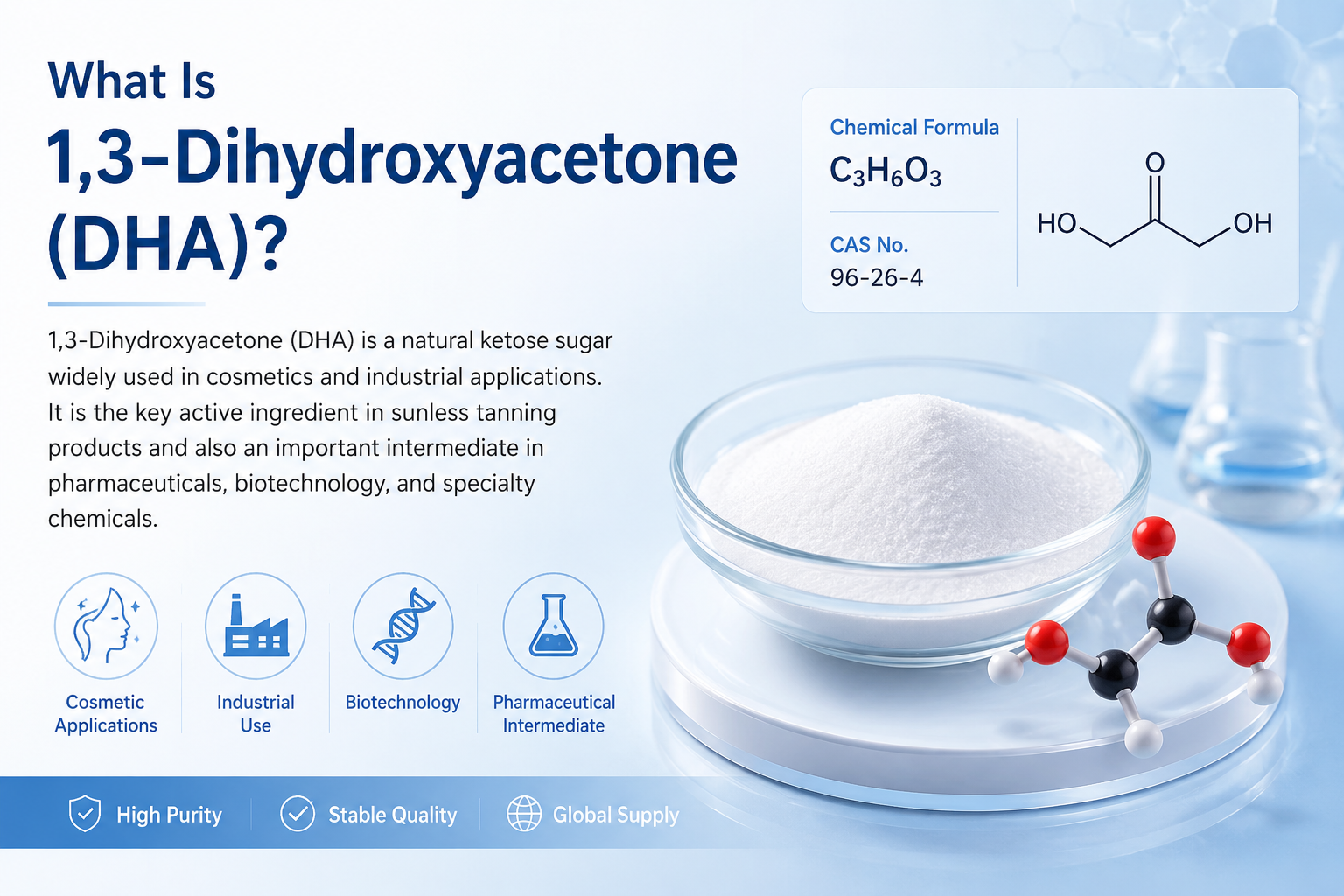
Core Chemical Profile:
Understanding the technical specifications of DHA is essential for quality control and formulation stability:
Molecular Formula: C₃H₆O₃
CAS Number: 96-26-4
Molecular Weight: 90.08 g/mol
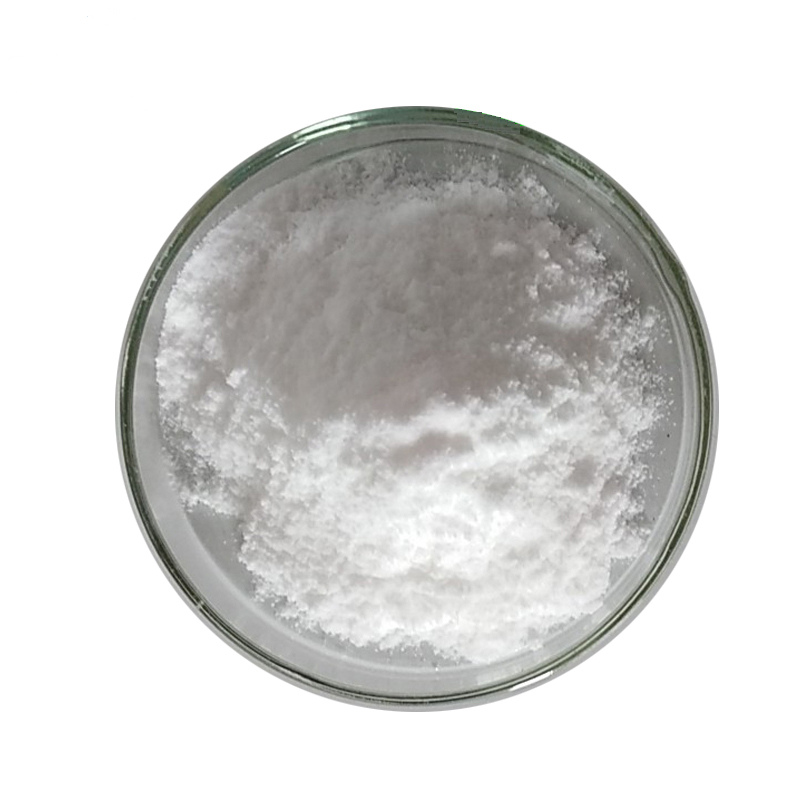
Appearance: Fine white crystalline powder
Solubility: Highly soluble in water, ethanol, and acetone
Its chemical structure is a three-carbon chain with a ketone group at position 2 and hydroxyl groups at positions 1 and 3, making it the simplest ketose without chiral centers. Phosphorylated as dihydroxyacetone phosphate (DHAP), it plays a key role in glycolysis and fructose metabolism.
Chemical Structure and Properties of DHA
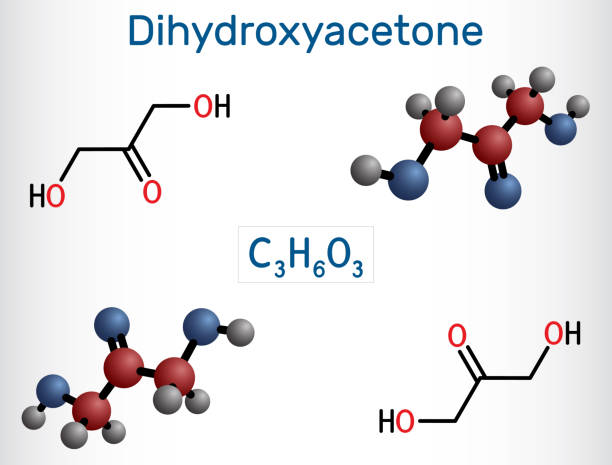
1,3-Dihydroxyacetone (DHA) features a simple molecular structure: a three-carbon chain (C₃H₆O₃) with a ketone group at carbon 2 and hydroxyl groups on carbons 1 and 3, classifying it as the simplest ketotriose sugar without chiral centers.
Chemical Behavior
DHA exists as a dimer in solid form but readily converts to its monomeric state in water, especially stable at pH 4-6. In alkaline conditions, it degrades into brown products; elevated temperatures accelerate degradation, particularly above 100°C, affecting its reactivity in formulations.
Hygroscopicity and Storage
Highly hygroscopic, DHA absorbs moisture as a white crystalline powder, requiring airtight, cool, dry storage to maintain stability. Its sweet taste and characteristic odor persist under proper conditions, but exposure to humidity or light reduces shelf life.
Solubility Profile
DHA exhibits excellent solubility in water and in alcohols such as ethanol, forming clear solutions ideal for aqueous and hydroalcoholic systems. It has limited solubility in non-polar solvents, influencing its incorporation in emulsions.
Stability in Cosmetics
DHA’s stability is crucial in cosmetic formulations to ensure consistent tanning efficacy and prevent discoloration or loss of activity during storage and application. Formulators use pH buffers, antioxidants, and low-temperature processing to mitigate degradation, guaranteeing product safety and performance.
How DHA Works in Sunless Tanning Products?
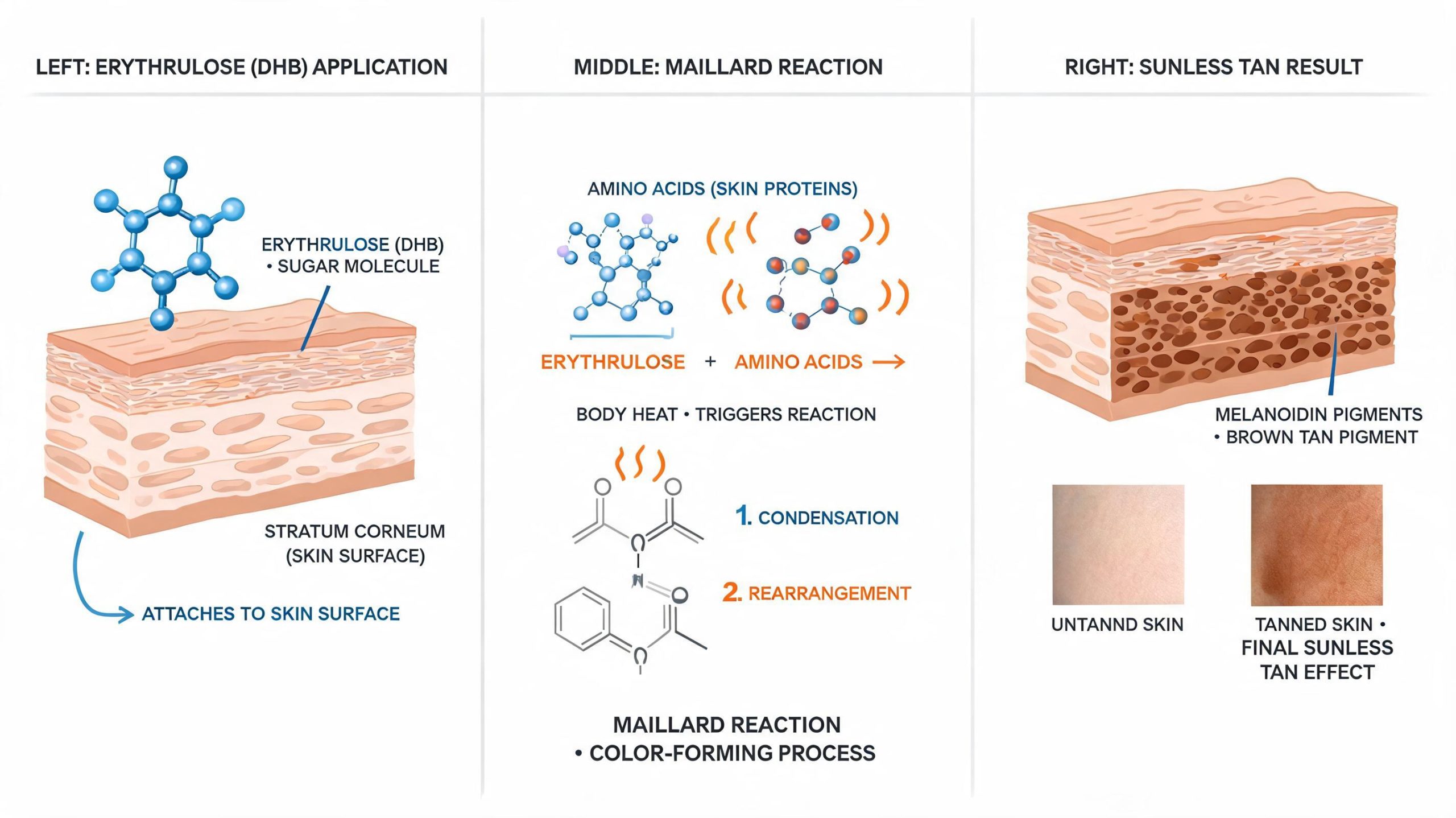
DHA triggers a safe Maillard reaction on the skin’s surface for natural-looking tans without UV damage. This process makes it the top choice for self-tanning products worldwide.
Tanning Mechanism
DHA reacts with amino acids in the stratum corneum via the Maillard reaction, forming brown melanoidins that mimic melanin. This non-enzymatic browning occurs only on dead skin cells, producing color within 2-4 hours and peaking at 24 hours.
Temporary Effects
DHA is a topical, non-systemic ingredient. Because it only reacts with the dead cells on the skin’s surface, it does not penetrate the living dermis or enter the bloodstream. The color development typically begins within 2 to 4 hours after application and continues to darken for up to 24 to 72 hours.
Comparison: DHA Tanning vs. UV Tanning
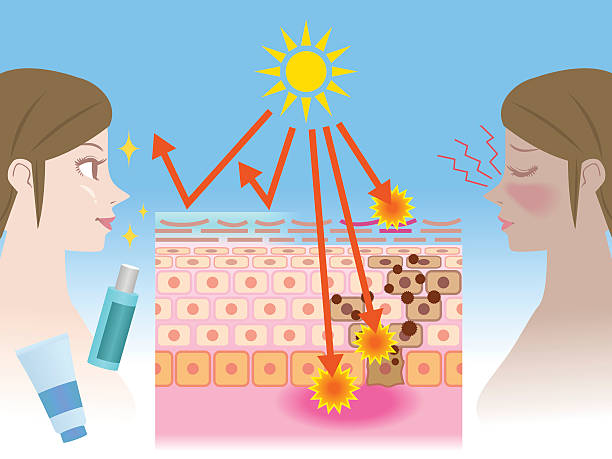
For consumers and healthcare professionals, the distinction between DHA and UV tanning is a matter of safety and mechanism:
| Aspect | DHA Tanning | UV Tanning |
| Mechanism | Surface Maillard reaction | Melanin production via UV |
| Depth | Stratum corneum only | Epidermis and deeper |
| Safety | No UV risk, temporary | Skin cancer, premature aging risk |
| Duration | 3-10 days, fades evenly | Variable requires maintenance |
| Development | 2-24 hours post-application | Gradual sun exposureioniqskin+1 |
Main Cosmetic Applications of DHA
DHA serves as the leading active ingredient in self-tanning cosmetics, enabling safe UV-free bronzing across diverse formats. Runtai Chemical supplies high-purity DHA ideal for lotions, sprays, and professional tanning formulations worldwide.
Self-Tanning Formats
DHA powers self-tanning lotions, mousses, creams, sprays, and wipes by reacting with the skin’s amino acids for even color development. These formats suit various preferences, from gradual daily use in lotions to rapid results in sprays.
Professional Spray Tanning
In salon spray tan solutions, DHA delivers streak-free, customizable bronze shades lasting 5-10 days. High-concentration formulas (10-15%) ensure professional-grade results on diverse skin tones.
Ingredient Combinations

DHA pairs with erythrulose for deeper, longer-lasting tans—DHA provides initial color while erythrulose extends fade time. Formulators add tanning accelerators like tyrosine or bronzers for immediate visual enhancement.
Industrial Applications of 1,3-Dihydroxyacetone
1,3-Dihydroxyacetone (DHA) extends beyond cosmetics into pharmaceuticals, biotechnology, and fine chemicals as a versatile intermediate.
Pharmaceutical Intermediates
DHA serves as a key precursor in synthesizing nitric acid esters like 1,3-dinitratoacetone and pharmaceutical scaffolds such as 1-methyl-5-hydroxymethylimidazole. It also enables lactic acid production using aluminum catalysts and supports nucleoside analogs for antiviral development.
Biotechnology Uses
As a substrate for galactose oxidase, DHA aids fermentation research and metabolic studies, particularly in glycolysis pathways via its phosphorylated form (DHAP). Microalgal and microbial processes leverage DHA in omega-3-related biotech, though primarily as a synthon from glycerol fermentation.
Specialty Chemicals
DHA functions as a building block for phosphorus-doped carbon quantum dots used in fingerprint imaging and biodegradable polymers/surfactants in sustainable chemistry. Its reactive hydroxyl and ketone groups make it ideal for heterocyclic compounds and polyol synthesis.
Emerging Applications
Recent advances explore DHA in artificial sweeteners, food additives, and electrocatalytic glycerol oxidation for scalable production. Laboratory reagents benefit from their role in fine chemical synthesis, with growing demand in green chemistry platforms.
Safety and Regulatory of DHA
Safety Profile
Extensive toxicological studies have confirmed that DHA is safe for topical application. Because the Maillard reaction only occurs in the stratum corneum (the dead outermost layer of the skin), the molecule does not reach living tissues or the bloodstream.
Regulatory Status
FDA recognizes DHA as safe and effective (GRASE) for self-tanning cosmetics. EU Cosmetic Regulation lists it without usage restrictions as a non-sensitizing colorant.
Why Partner with Runtai Chemical for DHA Supply?

Runtai Chemical is delivering bulk high-purity 1,3-Dihydroxyacetone for global cosmetic brands. Partner with us for reliable supply, competitive pricing, and comprehensive export support tailored to your formulation needs.
Conclusion
1,3-Dihydroxyacetone (DHA) delivers unmatched safety and efficacy as the gold-standard self-tanning active, with expanding industrial potential. Partner with Runtai Chemical for premium DHA that powers your formulations with proven stability and global compliance.