Introduction
Nicotinamide Mononucleotide (NMN) and Nicotinamide Riboside (NR) have become two of the most widely discussed NAD+ precursors in the healthy aging and dietary supplement industries. As research continues to reveal the essential role of NAD+ in cellular energy production, DNA repair, and mitochondrial function, interest in effective NAD+ boosting ingredients has grown rapidly among supplement brands, formulators, and consumers.
Although both NMN and NR are designed to increase NAD+ levels, they differ in their metabolic pathways, molecular characteristics, scientific evidence, and commercial applications. Understanding these differences is essential for selecting the right ingredient for your product formulation or business needs.
In this article, we’ll compare NMN vs NR, explain how each compound works, explore their benefits and ideal applications, and help you determine which NAD+ precursor is the better choice.
Why Do NAD+ Levels Decline with Age?
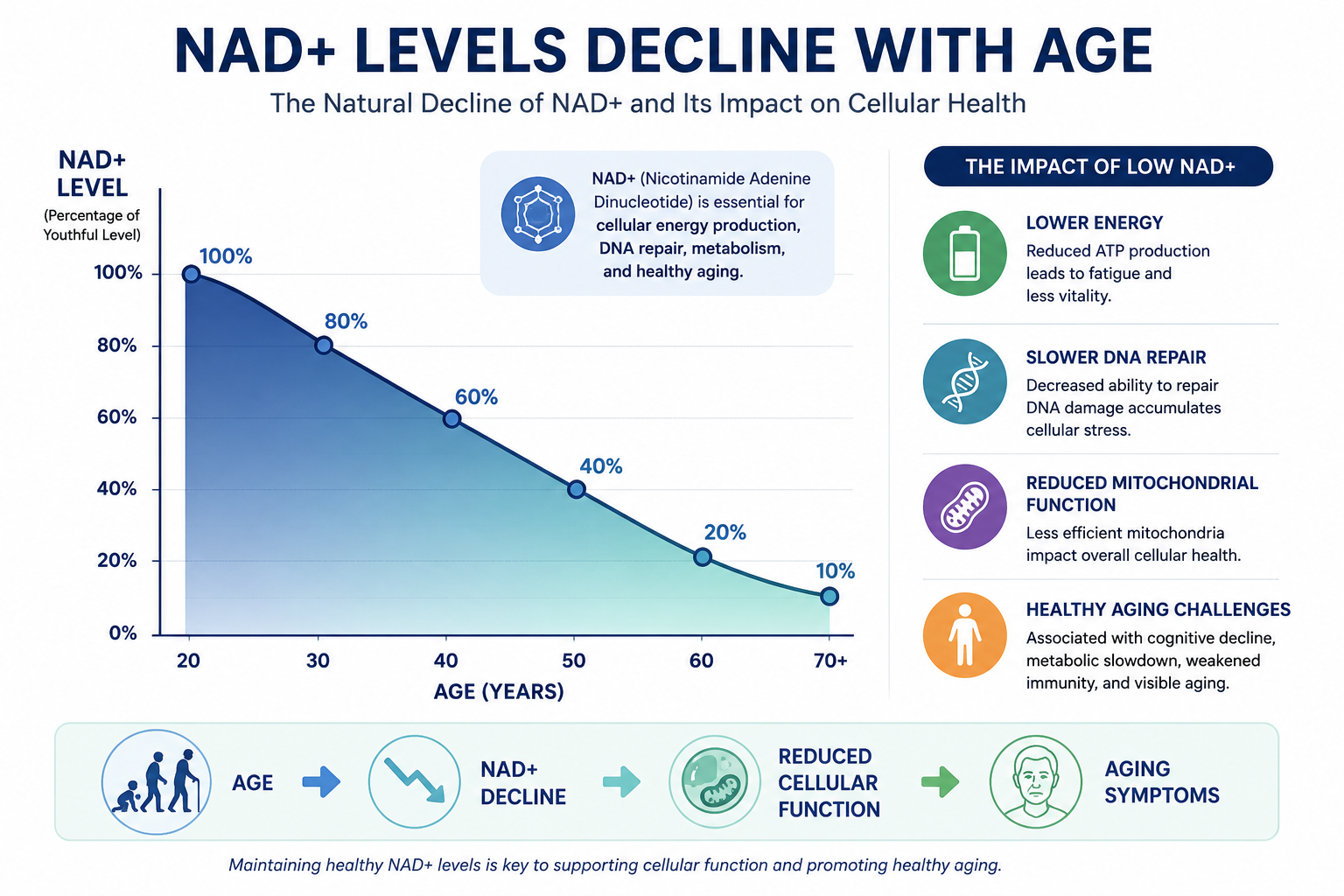
Nicotinamide adenine dinucleotide (NAD⁺) is a vital coenzyme found in all living cells, acting as a key “energy carrier” in cellular metabolism and redox reactions. It plays central roles in converting nutrients into ATP in the mitochondria, supporting DNA repair enzymes, and activating sirtuins that regulate cellular stress responses and longevity pathways.
Because of these functions, NAD⁺ is tightly linked to cellular energy production, genome stability, and mitochondrial function, making it a core focus in healthy aging and longevity research. When NAD⁺ is abundant, cells are better equipped to maintain efficient metabolism, repair daily damage, and adapt to physiological stress.
Why NAD⁺ Levels Decrease with Age
Multiple studies show that NAD⁺ levels gradually decline beginning around the age of 30–40 and continue to drop with advancing age. This decrease is driven by several factors, including reduced activity of NAD⁺ biosynthesis pathways and increased consumption of NAD⁺ by enzymes that respond to chronic, low‑grade inflammation and accumulated cellular damage.
Enzymes such as PARPs and CD38 consume more NAD⁺ as DNA damage and inflammation accumulate over time, effectively draining cellular NAD⁺ pools. At the same time, mitochondrial dysfunction and metabolic stress can further disrupt NAD⁺ recycling, creating a vicious cycle in aging tissues.
Consequences of Low NAD⁺
When NAD⁺ becomes depleted, cells struggle to sustain normal energy production, and ATP output from mitochondria can fall. This decline in cellular energy is often linked with feelings of fatigue, lower physical performance, and slower recovery after exertion.
Reduced NAD⁺ availability also limits the activity of sirtuins and DNA repair enzymes, which may contribute to genomic instability, cognitive decline, and accelerated cellular aging processes. Over time, these changes can manifest as reduced metabolic flexibility, weight‑management challenges, and increased vulnerability to age‑related health issues.
Why Use NAD⁺ Precursors Instead of NAD⁺ Itself?
Direct oral NAD⁺ supplementation is generally considered less efficient because NAD⁺ is a large, unstable molecule that is poorly absorbed intact through the digestive tract and is quickly broken down. In contrast, smaller precursor molecules such as NMN and NR are more readily absorbed and can enter established NAD⁺ biosynthesis pathways inside cells to rebuild NAD⁺ from within.
This is why most modern “NAD⁺ support” products focus on precursors rather than NAD⁺ itself, positioning NMN and NR as more practical options for maintaining healthy NAD⁺ metabolism and supporting cellular energy with age. From a formulation and commercial perspective, NAD⁺ precursors also offer better stability profiles and more flexible use in capsules, tablets, powders, and functional beverages.
What Is NMN? Benefits, Mechanism & Ideal Users
What Is NMN?
Nicotinamide mononucleotide (NMN) is a nucleotide derived from vitamin B3 (niacin) and is one of the most direct precursors used by the body to produce NAD+. NMN occurs naturally in small amounts in foods such as edamame, broccoli, cucumbers, and avocado, but typical dietary intake is very low compared with the doses used in supplements.
In the NAD+ biosynthesis pathway, NMN sits one step away from NAD+, which allows cells to convert NMN rapidly into NAD+ through specific enzymes like NMN adenylyltransferases. Chemically, NMN is a water‑soluble, slightly hygroscopic powder that is sensitive to heat and moisture, so high‑purity NMN raw material and controlled storage conditions are important for stable supplement and bulk ingredient supply.
How NMN Works
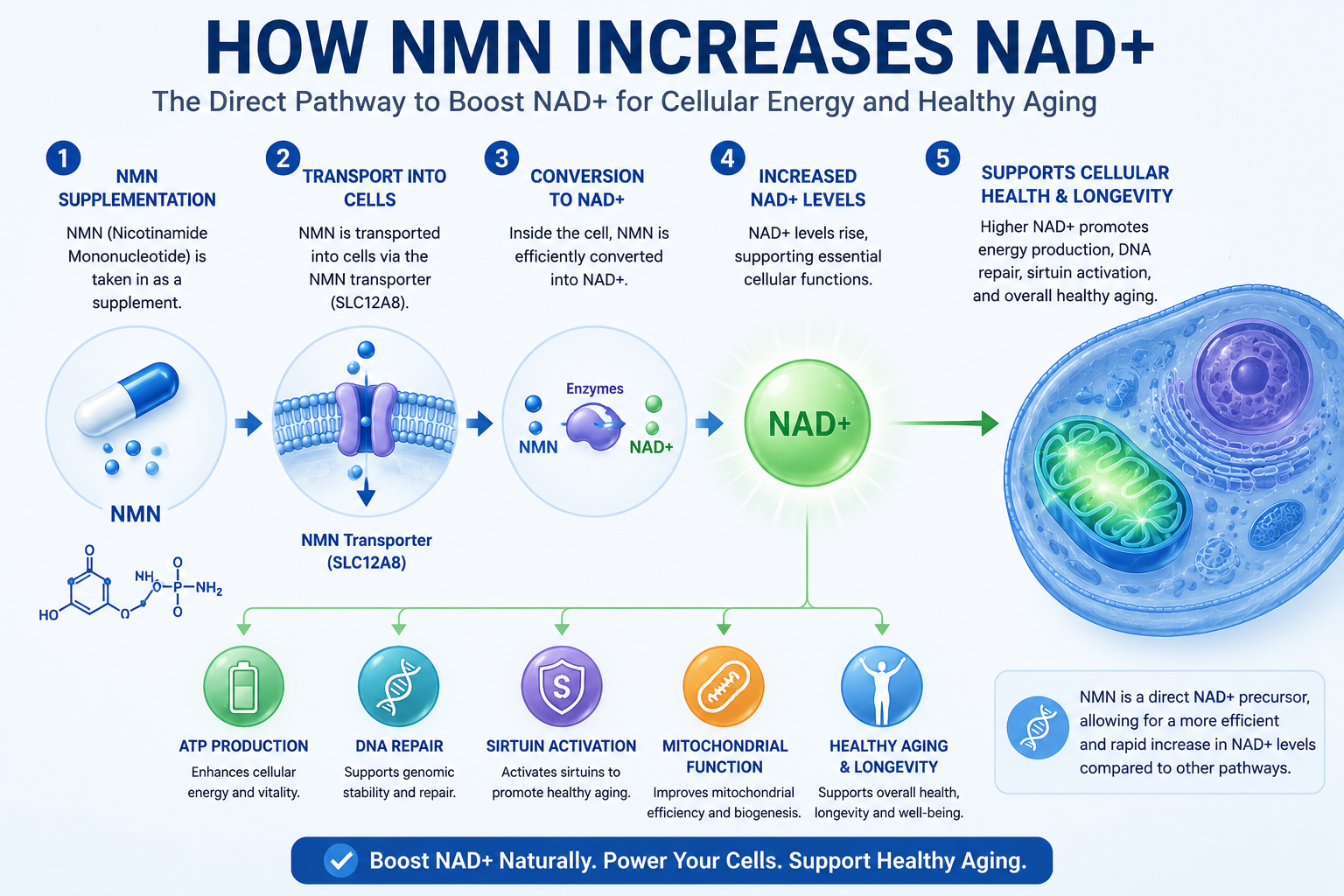
In simple terms, NMN serves as a building block that the body uses to rebuild NAD+ levels inside cells. Once ingested, NMN is taken up and converted into NAD+, which then participates in hundreds of redox reactions and acts as a cofactor for key enzymes involved in energy metabolism and cellular maintenance.
Higher NAD+ availability helps activate sirtuins, a family of NAD+‑dependent enzymes often described as “longevity proteins” because they regulate mitochondrial biogenesis, oxidative stress responses, and DNA repair. Through this NAD+ → sirtuin activation → mitochondrial support cascade, NMN is widely positioned as a nutritional ingredient that supports cellular energy production and healthy aging.
Benefits of NMN
Current preclinical and early human data suggest several potential benefits of NMN as an NAD+‑boosting ingredient, although more large, long‑term clinical studies are still needed.
- Supports healthy aging by maintaining intracellular NAD+ levels associated with cellular repair and stress resistance.
- Enhances cellular energy by supporting mitochondrial ATP production pathways that depend on adequate NAD+.
- Promotes mitochondrial function and biogenesis, which may translate into better endurance and resilience at the cellular level.
- Supports cognitive health by helping sustain neuronal energy metabolism and neuroprotective pathways in experimental models.
- May improve exercise recovery and performance markers by optimizing energy production and reducing fatigue in preliminary studies.
- Supports metabolic health, including glucose and lipid metabolism, through its role in NAD+‑dependent metabolic enzymes.
- Contributes indirectly to DNA repair support by fueling PARPs and other NAD+‑dependent DNA maintenance systems.
Who Should Consider NMN?
As a healthy‑aging and performance‑support ingredient, NMN is primarily targeted at adult consumers rather than children. The following groups are commonly highlighted by brands and formulators:
- Adults over 40 who are proactive about maintaining energy, vitality, and cellular health as natural NAD+ levels begin to decline with age.
- General healthy‑aging consumers looking for science‑backed ingredients linked to longevity and cellular resilience.
- Active lifestyle users and fitness enthusiasts who want extra support for energy metabolism and post‑exercise recovery.
- Athletes and sports‑focused consumers, especially where products combine NMN with electrolytes, amino acids, or other performance nutrients.
- Busy professionals under high stress who experience fatigue and are interested in cellular energy support.
- Individuals who closely follow longevity research and seek premium NAD+ precursors as part of a broader wellness routine.
- Positioning and dosage should always reflect local regulations and applicable guidance in each sales region.
Typical Applications of NMN
Thanks to its water solubility and relatively neutral taste in refined grades, NMN can be used in a wide range of finished product formats.
Common commercial applications include:
- Dietary supplements such as single‑ingredient NMN products or multi‑ingredient NAD+ formulas.
- Capsules, which remain the most popular delivery form for NMN due to convenience, precise dosing, andprotection from moisture and light.
- Tablets and effervescent tablets, often combined with other B‑vitamins, antioxidants, or mitochondrial support ingredients.
- Functional beverages and ready‑to‑drink shots, where NMN is blended with electrolytes, nootropics, or energy‑support complexes.
- Powder formulations, including bulk NMN powder for contract manufacturers and brands, as well as stick packs and sachets for direct‑to‑consumer use.
H2: What Is NR? Benefits, Mechanism & Ideal Users
What Is NR?
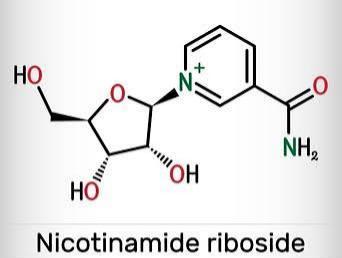
Nicotinamide riboside (NR) is a unique form of vitamin B3 that acts as a direct precursor to NAD⁺, the essential coenzyme involved in cellular energy production and metabolic regulation. As a vitamin B3 derivative, NR has attracted strong scientific interest because it can efficiently enter NAD⁺ biosynthesis pathways and raise NAD⁺ levels in cells and tissues.
In the nutrition and supplement market, the most widely used and researched form is nicotinamide riboside chloride (NR chloride), a crystalline, water‑soluble salt designed for stability and ease of formulation in capsules, tablets, and functional products. NR chloride is the standard commercial ingredient used by many premium NAD⁺ and healthy‑aging brands worldwide.
How NR Works
After oral intake, NR is absorbed and transported into cells, where it is first converted into NMN by specific kinases. The newly formed NMN is then quickly transformed into NAD⁺ through the cellular NAD⁺ biosynthesis pathway, boosting intracellular NAD⁺ pools.
Higher NAD⁺ availability supports normal cellular metabolism, including mitochondrial ATP production, redox reactions, and the activity of NAD⁺‑dependent enzymes involved in repair and stress responses. Through this NR → NMN → NAD⁺ route, NR functions as an efficient nutritional tool to support overall cellular energy and metabolic health.
Benefits of NR
NR is widely recognized as a clinically studied NAD⁺ precursor, with human trials showing its ability to increase NAD⁺ levels in blood and tissues. On this basis, brands and formulators commonly highlight the following science‑supported, structure–function style benefits:
- Helps increase and maintain NAD⁺ levels within the body.
- Supports healthy aging by promoting cellular resilience and metabolic balance as people get older.
- Promotes mitochondrial function, which is closely linked to energy, endurance, and cellular vitality.
- Supports cardiovascular health markers in certain studies, likely through improved mitochondrial and metabolic function.
- Helps support cognitive performance by sustaining neuronal energy metabolism and protecting against metabolic stress.
- Contributes to normal cellular energy production via its central role in NAD⁺‑dependent metabolic pathways.
Who Should Consider NR?
NR‑based products are typically positioned for adult consumers who value science‑backed, branded, or clinically tested ingredients. Typical target groups include:
- Adults seeking healthy‑aging support who want to maintain energy, vitality, and metabolic health as they age.
- General wellness supplement users who follow nutrition trends and look for premium NAD⁺ support formulas.
- Individuals who prefer ingredients with published human clinical data and recognizable branded NR materials.
- Premium supplement brands aiming to differentiate products with patented or highly researched NAD⁺ precursors.
Common Applications of NR
Thanks to its good stability as NR chloride and clean sensory profile, nicotinamide riboside fits well into a variety of finished dosage forms.Common commercial applications include:
- Capsules as single‑ingredient NR products or combined NAD⁺ support formulas for healthy aging and vitality.
- Tablets, including film‑coated and effervescent types, often blended with other B vitamins, antioxidants, or mitochondrial nutrients.
- Functional nutrition products such as drink mixes, shots, or fortified foods targeting energy, performance, and longevity.
- Anti‑aging and “cellular health” supplements positioned at the premium end of the market, frequently featuring branded NR ingredients.
NMN vs NR — What’s the Difference?
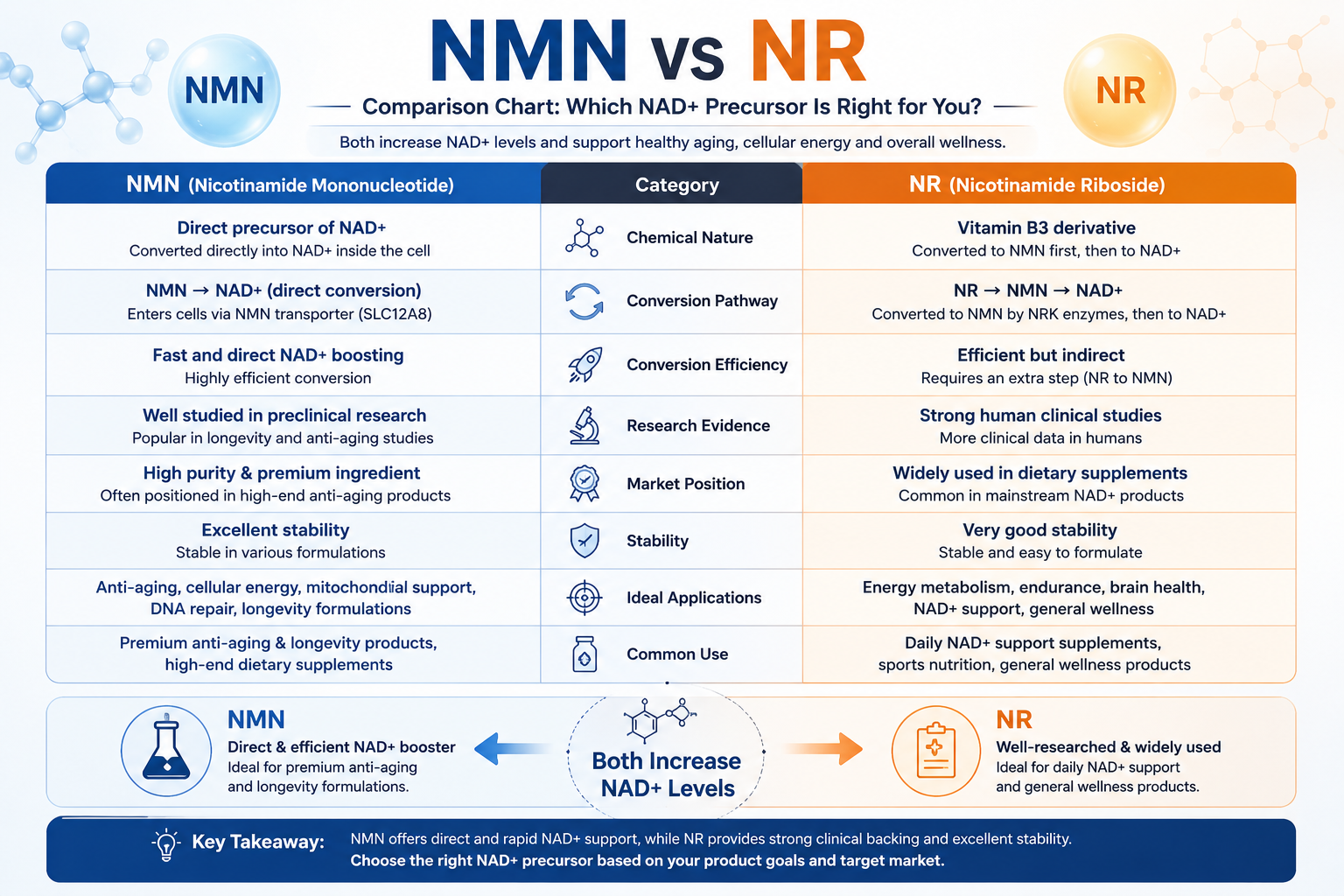
NMN (nicotinamide mononucleotide) and NR (nicotinamide riboside) are both vitamin B3–derived precursors used to increase NAD⁺ levels, but they differ in structure, metabolism, stability, and how they are used in products.
Molecular Structure
NMN is a nucleotide that contains a nicotinamide group attached to a ribose sugar plus a phosphate group, which makes it a slightly larger and more complex molecule. NR, in contrast, is a nucleoside that includes nicotinamide and ribose but does not have the phosphate group, so its structure is smaller and simpler.
Metabolic Pathway and Conversion to NAD⁺
Inside the body, NMN can be taken up by cells and converted directly into NAD⁺ through enzymes such as NMN adenylyltransferases, which is why it is often described as a “direct” NAD⁺ precursor. NR first needs to be phosphorylated by NR kinases and converted into NMN, and then this NMN is transformed into NAD⁺, following a NR → NMN → NAD⁺ pathway that is still efficient in raising cellular NAD⁺ levels.
Stability and Manufacturing Considerations
Both NMN and NR are water‑soluble, but NMN tends to be more sensitive to heat and moisture, so it requires tighter control of production, storage temperature, and packaging to maintain stability over shelf life. NR is most commonly used as nicotinamide riboside chloride, a crystalline salt form that generally offers excellent stability in solid dosage forms and is easier to compress and handle in large‑scale tablet and capsule manufacturing.
Scientific Research and Regulatory Status
The research base for NMN is expanding quickly, with many preclinical studies and a growing number of human trials focusing on metabolism and healthy aging, but it is still viewed as a relatively newer ingredient in some markets. NR, especially branded NR chloride materials, has a longer and more established clinical history, with multiple human studies demonstrating its ability to increase NAD⁺ levels and good tolerability, which supports its recognition by regulators in several major regions.
Typical Dosage and Popular Applications
In commercial products, NMN is usually formulated in moderate to high milligram doses per day, depending on local regulations, and is strongly associated with longevity, anti‑aging, and performance‑support supplements. NR is often used at similar or slightly lower daily doses guided by existing clinical work, and is widely featured in premium NAD⁺ support, general wellness, and healthy‑aging formulations.
Advantages of NMN
From a positioning perspective, NMN is attractive because it sits just one step away from NAD⁺ in the biosynthesis pathway, supporting the idea of rapid and direct conversion once it enters cells. This “direct precursor” story, combined with strong interest from the longevity and biohacking community, makes NMN a popular choice for brands that want cutting‑edge, healthy‑aging and cellular‑energy products.
Advantages of NR
NR’s main strengths lie in its robust clinical history, excellent stability as NR chloride, and wide international use in premium supplements. For brands and buyers who prioritize proven human data, regulatory clarity, and smooth global commercialization, nicotinamide riboside is often seen as a reliable, science‑backed NAD⁺ precursor.
Which NAD⁺ Precursor Should You Choose?
Choosing between NMN and NR depends less on which molecule is “better” in theory and more on your product concept, target market, and regulatory environment. Both are effective NAD⁺ precursors, but they occupy slightly different positions in the healthy‑aging and premium supplement landscape.
| If You Want… | Recommended Ingredient | Rationale |
|---|---|---|
| Longevity formulations | NMN | Often positioned as a direct NAD⁺ precursor and strongly associated with longevity and biohacking communities. |
| Energy support | NMN | Popular in products focused on cellular energy, mitochondrial function, and active‑lifestyle support. |
| Premium dietary supplements | NR | Nicotinamide riboside chloride has a strong clinical history and is widely used in high‑end NAD⁺ products. |
| Clinically recognized ingredient | NR | Branded NR ingredients offer published human data and clear positioning as science‑backed NAD⁺ boosters. |
| Anti‑aging formulations | NMN or NR | Both can effectively raise NAD⁺ and are suitable for “healthy aging” and “cellular health” positioning. |
| Combination NAD⁺ products | NMN + NR | Some brands combine both precursors to differentiate formulas and appeal to customers seeking comprehensive NAD⁺ support. |
Choosing a Reliable NMN & NR Supplier
For buyers in the NAD⁺ category, choosing the right NMN or NR supplier directly affects product quality, regulatory compliance, and long‑term brand reputation. Because NMN and NR are premium, science‑driven ingredients, buyers should apply strict evaluation standards when selecting bulk NAD⁺ precursor manufacturers.
Why Work with Runtai Chemical

Runtai Chemical positions itself as a professional NMN and NR supplier for global customers, offering high‑purity NAD⁺ precursor ingredients for dietary supplements and functional nutrition products. With a focus on bulk NMN and nicotinamide riboside, Runtai supports brands, distributors, and manufacturers worldwide that are building NAD⁺, healthy‑aging, and cellular‑energy product lines.
Conclusion
Both NMN and Nicotinamide Riboside (NR) are scientifically recognized NAD+ precursors that support cellular energy production, healthy aging, and overall metabolic function. While NMN is often favored for its direct role in NAD+ biosynthesis, NR is valued for its strong clinical research and established use in dietary supplements. The right choice ultimately depends on your formulation goals, target market, regulatory requirements, and product positioning.
Runtai Chemical is committed to supplying high-quality bulk NMN and Nicotinamide Riboside (NR) ingredients for global B2B customers. With strict quality control, complete technical documentation, and professional export services, we help our partners develop reliable, innovative, and market-ready NAD+ supplement products. If you are looking for a trusted NMN supplier or NR supplier, our team is ready to support your sourcing and formulation needs.